
How Much did it Cost to Beat EVERY Street Fighter II Arcade Game?
It took me 14+ hours, but I beat every one and have the data from all 6 games.

This was originally released as a video on my YouTube channel which can be viewed below. If you prefer to consume your media by reading, then please scroll on adventurer!

In 1991, Capcom released a fighting game that would change the landscape of video games forever. Street Fighter II would go on to become one of most popular games ever released and laid the foundation for every fighting game that would follow.
What’s going on world warriors? Steve here with another episode of Arcade Economy, the series where we look at arcade classics to determine just how much they cost to beat and how fair they were to our bankroll.
Did Street Fighter II fight fair? OR was Shadaloo looking to pound your allowance with a devastating combo. As Always, we’re going to find out!
Development
I realize that Street Fighter II’s history has probably been done to death at this point, but in these videos (articles) I always like to give some extra context for each game by showcasing the development history of the games I cover. So that’s what I’m going to do here because, well, I love video games and I think their history is important and should be talked about more. If that’s something you are not interested in, then feel free to scroll on to the bottom of this article to get the info you desire.
Let’s go back to where it all began… back to 1984. Game designer Takashi Nishiyama had just recently joined Capcom and was working on the concept for a new game with gameplay based solely around the boss fights from one of his previous titles Kung Fu Master. After a few years in development, Street Fighter would release in arcades in 1987.
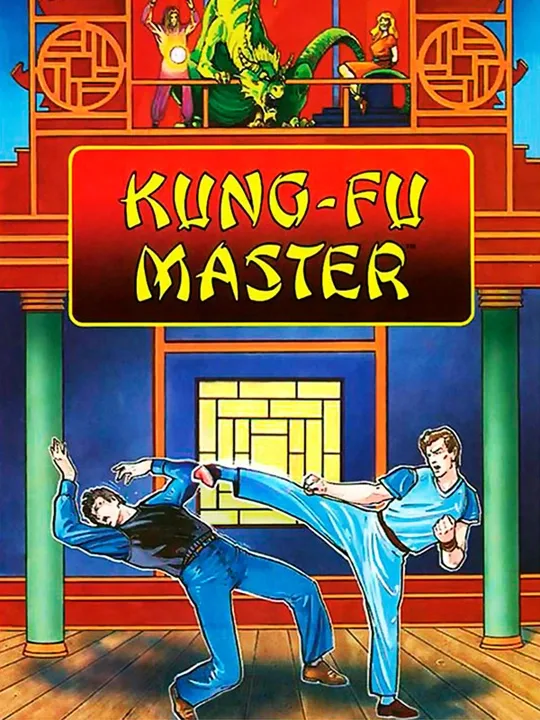
Data East USA, Irem
The international version of Spartan X, without the Jackie Chan movie license. Kung-Fu Master, known in Japan as Spartan X, is a 1984 beat 'em up arcade game developed and published in Japan by Irem. It was later published in North America by Data East. The Japanese version was based on the Jackie Chan movie Wheels on Meals, known as Spartan X in Japan, and credited "Paragon Films Ltd., Towa Promotion", who produced the film upon which it was based. The game is considered by many to be the first beat 'em up video game, and contains elements of Bruce Lee's Game of Death.
The game would go on to moderate success. It was a good idea, but a pretty tough play, and the hidden special moves had to be done so precisely that they were very hard to pull off.
Takashi Nishiyama left Capcom shortly thereafter for a new job with SNK where he would go on to develop games like Fatal Fury and King of Fighters. Capcom saw the potential they had in Street Fighter and immediately got to work on a sequel, tapping developers Akira Nishitani and Akira Yasuda.
Street Fighter '89/Final Fight

With the recent success of Double Dragon and the surge in beat 'em ups at the arcade, Capcom decided to pivot and switch the sequel from a fighter to a beat 'em up. And so Street Fighter '89 was sent out to trade shows. Capcom received a ton of feedback from arcade operators complaining that the side-scrolling brawler was nothing like the original one-on-one fighter. The feedback was so overwhelming that they changed the brawler's name to Final Fight, a game that would raise the bar in the beat 'em up genre with its large, detailed sprites and unique character moves.

Capcom, U.S. Gold, Kixx
Final Fight is a side-scrolling beat-'em-up produced by Capcom. Final Fight can be played by up to two players simultaneously. Before the game begins, the player chooses between the three main characters: Haggar, Cody, and Guy. Each has his own fighting style and attributes. Health gauges are displayed for both player and enemy characters. The controls for Final Fight consist of an eight-way joystick and two buttons for attacking and jumping respectively. Pressing the attack button repeatedly when attacking an enemy or multiple enemies will cause the player character to perform a combo. The final blow of the combo can be changed to a throw if the player moves the joystick in the opposite direction just before landing it. The player can also perform a jump attack. Pressing the attack and jump buttons simultaneously allows the player to perform a special attack that strikes all surrounding enemies, but will drain a small portion of the player's health. Enemies can be grabbed simply by walking into one of them. When an enemy is grabbed, the player can perform a grab attack by pressing the attack button or perform a throw by tilting the joystick left or right. A thrown enemy can be tossed at another for additional damage. Items such as weapons, health recovery items, and items awarding extra points can be picked up by standing over one and pressing the attack button. Weapons have limited uses and will disappear if the player is disarmed by an enemy too much or when the player moves to a new area. Final Fight consists of six stages or "rounds", as well as two bonus rounds. Each round takes place in a different section of Metro City such as the Slums and the Subway, with most rounds featuring more than one level. At the end of each round the player will face a boss character unique to that round.
Capcom wasn’t ready to give up on Street Fighter just yet, though, and after Final Fight’s success, the company went back to the drawing board to ideate how to revive the head-to-head fighter. To quote game producer Yoshiki Okamoto, “the idea was to take Street Fighter, a good game concept, but make it a better arcade game,” and uh, yeah, I couldn’t agree more!
Street Fighter II Releases and Legacy
Moving forward with a proper sequel, Capcom kept most of the dev team from Final Fight, with Akira Nishitani and Akira Yasuda back at the helm and composers Yoko Shimomura and Isao Abe tapped to produce the iconic soundtrack.
The team took the concept from the original Street Fighter game, combined it with the large sprites and art direction of Final Fight, optimized and smoothed out the gameplay mechanics, and in March 1991, Street Fighter II: The World Warrior launched in the arcade, changing video games forever.

Street Fighter II was unlike anything that came before it. It blew open the doors for the competitive head-to-head fighting game scene and kickstarted the fighting game boom that would take over the 1990s. It set the foundation for the genre. Without it, fighting games would look drastically different today. I also want to note that Street Fighter II was the direct inspiration for its main competitor, Midway’s Mortal Kombat.
Street Fighter II became the most successful arcade game since Pac-Man and spawned the next era of video games, the fighting game boom was born and with it came a new competitive scene. Capcom knew they had something special and so for the next half decade they would continue to tinker, balance and improve the game.
A year after the game’s initial launch, Capcom rolled out Street Fighter II': Champion Edition in the spring of 1992. This was a response to player demand for more content... but with great success comes great piracy and Street Fighter II’s surge in popularity caused a black market problem for Capcom. Taiwanese hackers started creating unauthorized, bootleg arcade boards, most famously the "Rainbow Edition." Plus, that same year Midway released Mortal Kombat to immediate success and now Capcom had some competition of its own. In order to compete with the bootleggers and a new franchise Capcom responded later that same year by releasing Street Fighter II' Turbo: Hyper Fighting.
By 1993 Street Fighter was still crushing it in the arcades and home console ports provided strong sales too… so if it ain’t broke, don’t fix it, amirite? Capcom looked to further enhance Street Fighter II, but the CP System, the arcade board that Street Fighter was built on was starting to show its age. In order to go bigger, Capcom upgraded to their brand-new CP System II (CPS-2) arcade hardware and released Super Street Fighter II: The New Challengers.
The following year and Capcom STILL wasn’t finished, they dropped what many purists consider the definitive fighting game of the era in early 1994: Super Street Fighter II Turbo.
From here, the franchise would eventually move on to the Alpha series, Street Fighter III and a number of spin offs. But the legacy of Street Fighter II was so powerful that Capcom returned to the arcades one last time in 2003. To celebrate the 15th anniversary, they released the ultimate love letter to the franchise with Hyper Street Fighter II: The Anniversary Edition.
Now throughout its arcade releases, the Street Fighter II games would find themselves ported to numerous consoles and home computers. For the sake of time, I’m not going to dive too much into this, but basically the SNES got The World Warrior and Turbo, Genesis/Mega Drive got Champion Edition, both consoles got Super Street Fighter II The New Warriors and the 3DO got Super Street Fighter II Turbo… Ah.. the future of gaming. Hyper Street Fighter II was a PS2 exclusive at the time of release but all games would eventually make their way over to numerous compilations and collections across multiple platforms.
There were 2 more (I guess you could call them standalone) Street Fighter II games that weren’t released in the arcade and these include Super Street Fighter II HD Remix for the Xbox 360 and PS3 in 2008 and Ultra Street Fighter II: The Final Challengers for the Nintendo Switch in 2017.
Street Fighter II’s success is undeniable; it held the top-grossing arcade game spot for three consecutive years from 1991-1993, and even today, the franchise shows no signs of slowing down. It has become not only one of the most popular fighting game franchises, but one of the most popular franchises in video game history, and it all started with the success of Street Fighter II.
Story
The official Capcom canon for Street Fighter II is actually much darker and more involved than the simple arcade ladder leads you to believe.
The plot centers around the second World Warrior fighting tournament, hosted and organized by the ruthless dictator M. Bison. Bison is also the leader of an international crime syndicate known as Shadaloo. He’s looking for the strongest fighters in the world, intending to recruit them into his evil empire or, according to the expanded lore, track down a powerful enough host body to contain his own dark soul.

While characters like Ryu, Ken, and Zangief enter the tournament for the challenge and prestige, others have a very specific bone to pick with the tournament's host. For example, the American Air Force soldier Guile enters the tournament to avenge the death of his close friend Charlie, while the Chinese Interpol officer Chun-Li is out for revenge after Bison murdered her father.
Gameplay
Street Fighter II proved to be an incredible leap forward in gaming upon its release. The game pushed highly detailed character sprites, active, lively backgrounds, fluid animations, unique movesets, and an incredible soundtrack.
Stepping up to a Street Fighter II cabinet meant learning a control scheme that was a little intimidating for its time. Capcom committed to the same six-button layout they had introduced with their initial installment: three buttons for punches and three for kicks, scaled across light, medium, and heavy attacks. Movement and blocking were handled with an eight-way joystick. Pulling off signature special moves required players to input precise fractional circles on the joystick combined with a button press. Again, something that was introduced in the original Street Fighter, but this time the inputs were much more forgiving. The game also pioneered a "combo" system, which was originally a happy accident discovered by the developers where certain attack animations naturally flowed into each other. The game also features a diverse roster of characters hailing from many different countries, something that was also established in the original and would be expanded upon in future iterations.
Street Fighter II was mainly a 2-player competitive game, especially when it released in the early '90s. Players would go to the arcade and wait in line to fight against other arcade-goers. The winner would stay on to take on new challengers. If you did happen to play solo, you would have to defeat a ladder of opponents in order to beat the game.
Differences Between Versions

Capcom
A sequel to Street Fighter, Street Fighter II improved upon the many concepts introduced in the first game, including the use of command-based special moves and a six-button configuration, while offering players a selection of multiple playable characters, each with their own unique fighting style and special moves. Street Fighter II is credited with starting the fighting game boom during the 1990s. Its success led to the production of several updated versions, each offering additional features and characters over previous versions, as well as many home versions. Some home versions of the Street Fighter II games have sold millions of copies, with the SNES port of the first Street Fighter II being Capcom's best-selling consumer game of all time as of 2008. Street Fighter II follows several of the conventions and rules already established by its original 1987 predecessor. The player engages opponents in one-on-one, close-quarters combat in a series of best-of-two-out-of-three matches. The objective of each round is to deplete the opponent's vitality before the timer runs out. If both opponents knock each other out at the same time or the timer runs out with both fighters having an equal amount of vitality left, a "double KO" or "draw game" is declared. Additional rounds will be played until sudden death. In the first Street Fighter II, a match could last up to 10 rounds if there was no clear winner; this was reduced to 4 rounds in the Champion Edition and onward. If there is no clear winner by the end of the final round, then either the computer-controlled opponent will win by default in a single-player match, or both fighters will lose in a 2-player match. After every third match in single-player mode, the player will participate in a "bonus game" for additional points. The bonus games include (in order) a car-breaking event; a barrel-breaking bonus game where the barrels are dropped off from a conveyor belt above the player; and a drum-breaking bonus game where drums are flammable and piled over each other. The bonus games were removed from the arcade version of Super Street Fighter II Turbo. As in the original, the game's controls use an eight-directional joystick and six attack buttons. The player uses the joystick to jump, crouch, move the character towards or away from the opponent, and guard against the opponent's attacks. There are three punch buttons and three kick buttons, each with varying strength and speed (Light, Medium, and Heavy). The player can perform a variety of basic moves in any position, including grabbing/throwing attacks, which were not featured in the original Street Fighter. Like in the original, the player can perform special moves by inputting a combination of directional and button-based commands. Street Fighter II differs from the original in that it features multiple playable characters, each with distinct fighting styles and special moves. Additionally, the player can "cancel" an animation by performing another move, enabling combinations of basic and special moves. Both of these features would be expanded upon in subsequent installments.
In The World Warrior (1991), you selected from a roster of eight different fighters, each with their own skillsets and special moves. These fighters included Ryu, Ken, E. Honda, Blanka, Guile, Chun-Li, Dhalsim, and Zangief. The player must complete 11 matches in order to beat the game, with 3 bonus stages that allowed players to add extra points. These included destroying a car (a callback to Final Fight), breaking falling barrels, and taking out a pyramid of flaming barrels. After defeating 7 characters on the ladder, the player would have to fight the 4 unplayable Shadaloo bosses: Balrog, Vega, Sagat, and M. Bison.

Capcom, NEC Home Electronics
Street Fighter II: Champion Edition is a competitive fighting game released for the arcades by Capcom in 1992. It was the first of several updates to the original Street Fighter II: The World Warrior. The main changes consisted of adding the Grand Masters (the final four computer-controlled opponents in single-player mode) as playable characters and mirror matches (same character vs same character). The fighting techniques of the eight main characters from the original game were also further refined to allow for more balanced competitive play. The Champion Edition was followed by Street Fighter II' Turbo: Hyper Fighting, released several months later.
With Champion Edition (1992), Capcom unlocked the four boss characters, bringing the fully playable roster up to twelve. They also implemented alternative color palettes, which allowed for mirror matches so that two players could select the exact same character.

Street Fighter II Turbo: Hyper Fighting is a competitive fighting game released for the arcade by Capcom in 1992. It is the third game in the Street Fighter II sub-series of Street Fighter games following Street Fighter II: Champion Edition. Released less than a year after the previous installment, Hyper Fighting introduced a faster playing speed and new special moves for certain characters, as well as further refinement to the character balance. Hyper Fighting is the final arcade game in the Street Fighter II series to use the original CP System hardware. It was distributed as an upgrade kit designed to be installed into Champion Edition printed circuit boards. The next game in the series, Super Street Fighter II, uses the CP System's successor, the CP System II.
Turbo: Hyper Fighting (1992) accelerated the overall gameplay speed in response to the hacked Rainbow Edition. Capcom also implemented some balances and gave brand-new special moves to some of the existing cast.

Super Street Fighter II: The New Challengers is a 2D fighting game that expands the original Street Fighter II roster with four new characters: Cammy, Dee Jay, T. Hawk, and Fei Long. Players choose from 16 fighters, each with unique moves, to compete in one-on-one matches. The game introduces updated graphics, rebalanced gameplay, and new special moves, continuing the World Warrior Tournament storyline.
With the hardware upgrade in Super Street Fighter II: The New Challengers (1993), the roster bumped up to 16 by introducing four brand-new fighters: Cammy, Fei Long, Dee Jay, and T. Hawk. The game reverted to a slightly slower, more deliberate speed than Hyper Fighting, but added completely redrawn character portraits, new color palettes, remixed audio tracks and voice lines, and a visual combo counter.

Capcom, Matsushita Electric Industrial, GameTek, Inc.
Super Street Fighter II Turbo, released in Japan as Super Street Fighter II X: Grand Master Challenge, is a competitive fighting game released for the arcades by Capcom in 1994. It is the fifth installment in the Street Fighter II sub-series of Street Fighter games, following Super Street Fighter II: The New Challengers. Like its predecessor, it ran on the CP System II hardware. Super Turbo introduced several new gameplay mechanics not present in previous versions of Street Fighter II, including the addition of Super Combos and air combos. It also introduced the secret character Akuma, who would go on to become a recurring character in later Street Fighter installments and other Capcom fighting games. Super Turbo was originally ported to the 3DO Interactive Multiplayer, followed by the PlayStation and Sega Saturn (under the title of Super Street Fighter II Turbo: The Ultimate Championship) as part of the Street Fighter Collection, and for the Dreamcast in Japan under the title of Super Street Fighter II X for Matching Service. A remake of the game was released for the PlayStation 3 and Xbox 360 titled Super Street Fighter II Turbo HD Remix.
Super Street Fighter II Turbo cranked the game speed back up and introduced two new mechanics: air combos that allowed players to juggle opponents in mid-air, and the Super Combo meter. By filling up a gauge at the bottom of the screen, players could unleash a devastating, multi-hit Super Combo. It also featured the debut of the hidden, overpowered boss, Akuma. Players could select him by meeting certain circumstances on the character select screen or fight against him by reaching M. Bison without continuing in under 25 minutes with a score over 1.2 million points. (Yeah…. Good fucking luck)

Hyper Street Fighter II: The Anniversary Edition is a modified port of Super Street Fighter II Turbo in which players can control any versions of the main characters from the five Street Fighter II games previously released for the arcades.
Finally, Hyper Street Fighter II allowed players to select and battle any version of a character from all five previous arcade releases. If you wanted to pit a sluggish Champion Edition Ryu against a lightning-fast Super Turbo Ken, this was the game that let you do it.
Thoughts After Beating Each Game
Now, as we’re about to get into how much I spent, I want to just quickly cover my experience with all 6 of these games. The difficulty appeared to ramp up with every new iteration I played. And I went into this challenge as a not-so-great Street Fighter player, and I think I’m coming out of this challenge as an okay Street Fighter player who can identify exploits in Street Fighter II’s CPU. Because that’s basically what you have to do in order to beat these games.
Every single one of these games input reads to some extent, and it gets more atrocious with just about every new version. And speaking of input reading, Super Street Fighter II Turbo and Hyper Street Fighter II are both bugged to be at an insane difficulty with HEAVY input reading, making it near impossible to play on the offensive… and while I do play these on an emulator, that doesn’t matter because the actual international arcade cabinets had these bugs too. The Japanese versions are much more forgiving, but for the sake of this show, I stuck with it even though it nearly drove me insane.
Because each character plays differently, every character has to be countered differently, and some of them take a lot more time to figure out than others. Because every game adds new speeds and balances, what worked to beat some characters in a previous version might not work in the next. There were a number of characters that I continued to have a particularly hard time with in every game, and they were Blanka, Dee Jay, and Vega. For the most part, the other 3 boss characters, Bison included, didn’t give me too much trouble, all things considered.
Some methods that I used to beat the game were jump heavy-punching with Chun-Li directly into a sweep or duck heavy punch. Chun-Li’s air grab move also helps a ton in countering jumping enemies.
Many CPU characters have a hard time defending Bison’s Psycho Crusher attack, so when I figured this out, I spammed it when I could. It doesn’t work against everyone, but it does work against a lot of the fighters. In Hyper SFII, I had to set my speed down to one and specifically use Champion Edition Bison for this to work.
Jumping straight up and kicking, and utilizing sweeps, works well too. I used Ryu to do this to defeat Vega; you just have to be patient and let him come to you, and be mindful of the distance between fighters. I also occasionally used Ryu to range-spam Hadoukens.
Sagat was a character I frequented too, and I used the same method with his ranged tiger shots, alternating between high and low. Sagat also has good defense with his heavy kick for enemies that are getting too close.
Results
So how much did I spend to beat EVERY version of Street Fighter II? For these games, I play them on an emulator and set up a counter to increase every time I start or continue. Since I played through 6 games, I think we’re going to need a CVS-length receipt for this one, so let’s get into the data.
The World Warrior
This game defaulted to 25-cent credits, but Street Fighter II was the game known for increasing 25 cents to 50 cents, so we’ll look at both. I beat this game using Chun-Li, and in the end, I spent $4 or 16 plays to beat it. Adjusted for inflation, $4 in 1991 would feel like spending $9.93 today. At 50-cent credits, this would be $8 to beat and feel like spending $19.85 today.
For my cost per minute on these stats, I’m going to use the 50-cent metric, so it took me 44 minutes to beat The World Warrior, which brings my cost per minute to just over 18 cents per minute.
I didn’t really have too much of a problem with any of the fighters on this game. I didn’t spend more than one or 2 continues, and some characters I beat on the first try. We’re off to a good start!
Champion Edition
Things got a little more difficult with Champion Edition. I used mostly Chun-Li and Sagat in this game. This took me $13.25 or 53 plays to beat on 25-cent credits. $13.25 in 1992 would FEEL like spending $31.86 today. If we’re looking at 50-cent credits, then that would factor out to $26.50, which feels like $63.73 today. Already seeing a big difference here.
It took me 2 hours and 10 minutes to beat Champion Edition, bringing my cost per minute to 20 cents.
The characters that gave me a hard time here were as follows:
- I spent 12 continues to beat Blanka
- I spent 11 continues to beat Guile
- And 10 continues to beat Ken
Turbo
Turbo: Hyper Fighting was when I really started to see some trouble. The characters I used to beat this were a combination of Chun-Li, Sagat, and M. Bison. I finished the game with Chun-Li. I spent $17.50 or 70 plays to beat it on 25-cent credits, which would feel like spending $41.31 today. 50-cent credits factor out to $35, which would feel like $82.62 today.
It took me 2 hours and 20 minutes to beat Street Fighter II Turbo: Hyper Fighting, which factored out to 25 cents per minute. We’re starting to see a trend here…
Character that gave me a hard time:
- E. honda 10 continues
- Blanka 33 continues (Psycho Crusher FTW)
Super
For Super Street Fighter II: The New Challengers, this one made the previous versions feel easy. I mostly played as Sagat and Bison here and started mixing in Ryu a bit. I did wind up finishing it with Bison. I spent $20.50 or 82 plays to beat it on 25-cent credits, which would feel like spending $47.13 in today’s money. 50-cent credits factor out to $41, which, adjusted for inflation, brings us to $94.26 today.
It took me 3 hours to beat Super Street Fighter II: The New Challengers, bringing my cost per minute to 23 cents per minute. So, even though I spent more, my cost per minute was less, and I think that’s because there were a bunch of rounds that I was straight-up on the defensive letting the time run out.
Character that gave me a hard time:
- 47 continues on Dee Jay more than half of my 82 plays.
- 16 continues on Vega
Super Turbo
For Super Street Fighter II Turbo, I used a mixture of Bison, Sagat, and Ryu. I did wind up beating it with Bison again, but the Psycho Crusher didn’t work as much as in the past. They weren’t lying about this machine being bugged because it cost me $26.75 or 107 plays to beat Super Turbo on 25-cent plays, which, adjusted for inflation, feels like $61.03 today. For 50 cents, this would factor out to $53.50, which, adjusted for inflation, feels like a whopping $122.16.
It took me 4 freaking hours and 24 minutes to beat Super Turbo, which actually factors out to 20 cents per minute. One thing I did notice with Super Turbo was that I would beat the CPU more times in the first round, and then it would just completely turn around and get super aggressive in rounds 2 and 3. So, a lot more 3-rounders in this one, which is probably why my cost per minute is lower.
Characters that gave me a hard time:
- 26 continues on Zangief
- 10 Continues on Chun Li
- 17 continues on Blanka
- 20 Continues on Vega
- 10 Continues on Sagat
- 10 Continues on M. Bison
Hyper
Again, I beat this one with Bison and used a mixture of Bison, Sagat, Ryu, and Chun-Li. This game defaults to 50-cent credits, so I only have that data. It took me $30.50 or 61 plays. So I guess I got some good practice from Super Turbo. Adjusted for inflation, $30.50 in 2003 would feel like spending $56.23 today.
It took me an hour and 57 minutes to beat Hyper Street Fighter II, which factors out to 26 cents per minute, so actually the highest cost per minute of all 6.
Characters that gave me a hard time:
- 17 continues on E. Honda
- 37 continues on Blanka
- 10 continues on Ryu
- 24 Continues on Bison
Total
Alright, so let’s tally 'em all up! We’re gonna go by my 50-cent metrics here, so when combined to beat all 6 Street Fighter II arcade games, it cost me $194.50 or 389 plays. When tallying up all of the inflationary costs, we get a total of $450.86.
It took me a total of 14 hours and 35 minutes to beat all 6 games… good thing I got started on this months ago… that brings my average cost per minute to 22 cents.
The 3 characters that gave me the hardest time were:
- Blanka
- Dee Jay
- Vega
How Fair is Every Version of Street Fighter II?
Look, as many of you may know, I am a Mortal Kombat guy. Obviously, I played Street Fighter when I was younger, but I always preferred MK to SF. That being said, I did enjoy my time here, as frustrating as it was at times, and I think this turned me into a much better Street Fighter player. I also did not expect some of these games to input read worse than MKII, or at least, the exploits in this game weren’t as apparent as they are in MKII in my opinion. This game pulls off moves that are just impossible to do, they’ll always beat you on throws, and for a novice player who might go into the game playing offensively, it’s just straight-up going to take your money, and quickly… at least, most of the versions of the game are.
The other thing is that I have a hard time vibing with Street Fighter's special moves, and sometimes I feel like I’m doing the right inputs, but the moves just don’t work. I’ve always felt like this with Street Fighter; again, maybe I’m just not good, but this is something that stayed with me until the end. Even when I was playing through Hyper SFII, I was still whiffing on moves that I thought I was entering correctly.
So where do these land on the scale? For The World Warrior, I think this game is pretty fair. $4… or $8 isn’t bad at all. There was still some input reading though, and it can be difficult at times. I’m going to put this one at a 4.
Champion Edition is a steep increase in difficulty, and while I thought it was really hard while I was playing… I had no idea what I was in for. I’m going to put this one at an 8. Turbo, Super, Super Turbo, and Hyper—they’re all 10s. Super Turbo might even break the scale if I’m being honest. So for the final score, I’m looking at it like this: Chances are the longevity of Street Fighter II from Turbo onward is much greater than the couple of years that World Warrior and Champion Edition were in the arcades, so the probability that you are playing one of the super unfair Street Fighters is much higher… and BOY do they cheat. So, combining them into one score, Street Fighter II is getting the full predatory treatment of a 10 out of 10 on the predatory games scale.

Now can you play this game today? Yes it’s not hard to find. You can officially play all of these versions of Street Fighter II on the Street Fighter 30th Anniversary Collection. You can also play Ultra Street Fighter II on the Nintendo Switch.
Next time on Arcade Economy, We’re looking at another Capcom classic, Ghosts N Goblins, so be sure to check back for that video!
This was easily the longest video I had to make. Crazy that it took me 14+ hours to beat. I actually got started playing these games like 3 months ago and I’m glad I did because I never would have been able to turn this video around in a couple weeks. I knew it was going to take me a while so I was hopping into all the different versions whenever I had downtime and honestly I’m glad I spent this time with Street Fighter II, I feel like I finally understand it in a way, maybe I won’t get my ass kicked so bad the next time I play against an actual person.