
Onimusha: Way of the Sword Review | The Return the Series Deserved
A confident comeback built on sharp sword combat, memorable bosses, and a strong samurai identity.

Gaming-Sanctum really enjoyed Onimusha: Way of the Sword
“Onimusha: Way of the Sword is a strong return for the series, driven by excellent sword combat, memorable boss fights, a great atmosphere, and a compelling take on Miyamoto Musashi. Some repetition and weaker pacing in the final third hold it back, but the core combat remains satisfying throughout.”
Twenty years after the last mainline entry in the series, Onimusha returns with Way of the Sword. In our review, we take a closer look at the new beginning through which Capcom aims to reintroduce the franchise to a modern audience. The protagonists and continuity of the previous games have been left behind, but the core identity of Onimusha remains intact: samurai, Genma, Oni powers, and a version of Japan where real history collides with the supernatural.
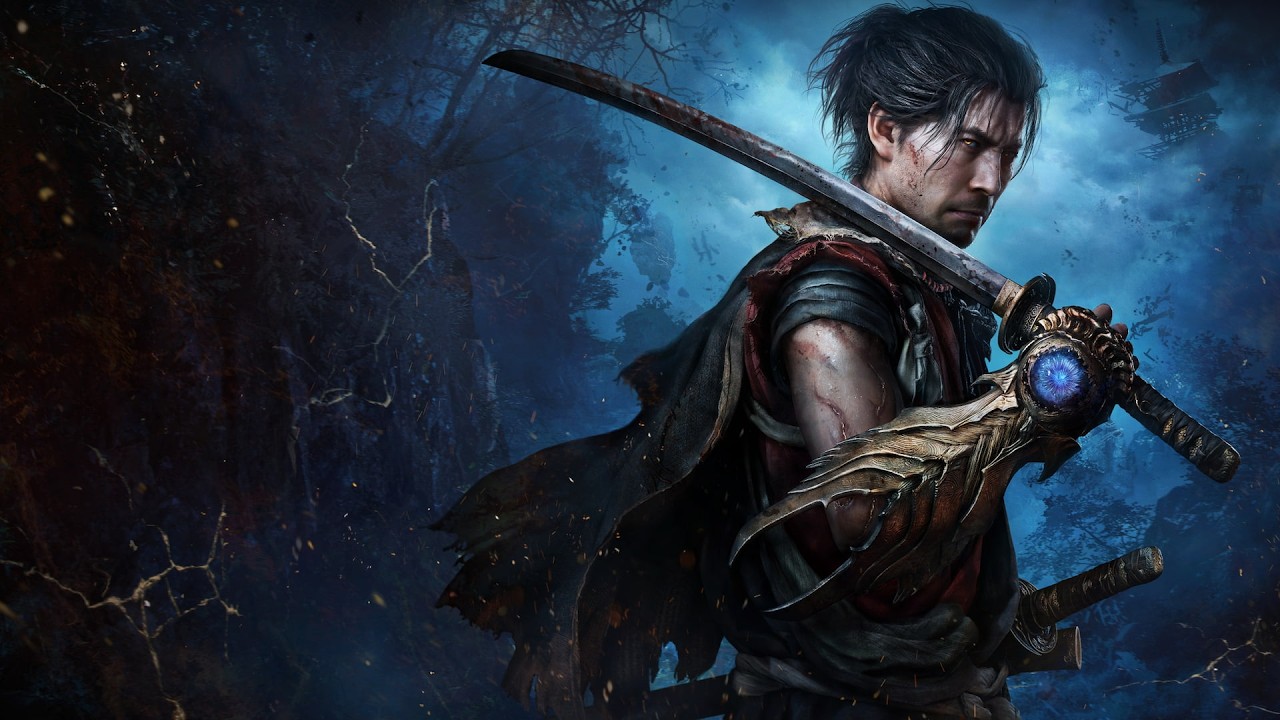
At the center of this new story is Miyamoto Musashi, based on the legendary historical figure and modeled after the late Toshiro Mifune. The adventure takes place in Kyoto during the early Edo period and tells a standalone story built around real historical figures, Japanese mythology, and the dark fantasy that has defined Onimusha since the beginning.
Story
The story follows Miyamoto Musashi, a wandering samurai who is far more interested in testing his abilities against powerful opponents than becoming a hero. The appearance of the Genma and his acquisition of the Oni Gauntlet pull him into a conflict he never chose, while Musashi himself struggles to accept a power he did not earn through his own skill.
Inside the gauntlet resides Shizuka, whose relationship with Musashi gradually develops into a meaningful partnership. Takamura serves as an experienced mentor, while Okuni rounds out the main cast. Standing against Musashi is Ganryu, who also obtains an Oni Gauntlet but chooses a much darker path, going as far as absorbing human souls in order to increase his power.
The strongest part of the narrative lies in its characters, particularly Musashi himself. He is arrogant, blunt, and frequently reluctant to help others, yet smaller moments quickly reveal another side of his personality. One particularly effective example comes when he initially refuses to give his last rice ball to a group of children, only to change his mind after noticing a dog among them.
During the second half, however, the mythology surrounding the Genma, the Oni, and the two worlds becomes increasingly dense, causing the story to lose some of its earlier momentum. Even so, Musashi's development, his relationship with Shizuka, and his rivalry with Ganryu keep the narrative together until the end.
Setting / Environment

The Way of the Sword takes place in Kyoto during the early Edo period, presenting a city that is gradually collapsing under the spread of Malice. Traditional Japanese architecture and historical landmarks coexist with the demonic presence of the Genma, creating a setting that remains unmistakably Japanese while being heavily distorted by Onimusha's supernatural elements.
Kyoto serves as the central hub between main missions without turning the game into a true open world. From there, the story takes us to more controlled locations such as Kiyomizu-dera, the Arashiyama Bamboo Forest, castles, the Imperial Palace, and the Oni world itself, which stands apart through its more abstract and supernatural architecture.
The variety of the main missions gives most locations a distinct identity, but central Kyoto gradually begins to lose some of its freshness after several hours. Its narrow streets, courtyards, and almost maze-like structure fit the setting well, yet the frequent returns eventually make certain areas feel more similar to one another than they should.
Gameplay and Mechanics
Onimusha: Way of the Sword remains a third-person action game, but Capcom has modernized the series with full three-dimensional movement and a close third-person camera that follows Musashi throughout the action. Between combat encounters, there are short puzzle and platforming sections, although these work primarily as changes of pace rather than major pillars of the experience.
Several of Musashi's abilities serve more than one purpose. The Oni Bow can be used both for ranged attacks and to activate mechanisms, while abilities acquired later, such as wall running, open up additional routes. Oni Vision also allows Musashi to detect hidden objects and elements that would otherwise remain invisible, without forcing players to rely on it constantly while exploring.
There is also a limited but enjoyable degree of environmental interaction. Carts can be pushed into enemies, while wooden boards can be used as temporary shields or weapons.
Soul absorption remains one of the central mechanics. Red souls are primarily used for progression, yellow souls restore health, and blue souls fill the Oni Armament gauge. Absorbing them requires some awareness of timing because Musashi can remain exposed while drawing them toward the gauntlet.
More importantly, powerful enemies and bosses can absorb those same souls themselves, temporarily increasing their strength and gaining additional attacks in the process.
Combat

Combat is where Way of the Sword truly establishes its identity. It does not rely on endless combos, nor does it strictly follow the philosophy of a Soulslike. Instead, success depends on reading opponents and choosing the appropriate response to each attack.
Musashi has access to light and heavy attacks, but much of the system's depth comes from defense. Blocking consumes stamina, dodging is particularly useful against grabs and unarmed attacks, parrying creates openings while increasing the Blazing Gauge, and deflecting removes more stamina from opponents, making it especially effective against heavily armored enemies.
Issen is the most demanding and satisfying technique available. With precise timing, Musashi can narrowly avoid an incoming strike and respond with a powerful counterattack. Once an enemy's stamina has been depleted, the opportunity for a Break Issen opens up, while bosses also feature weak points that force players to choose between dealing additional damage or obtaining extra souls.
The Oni Armaments expand the available options even further. Two Celestials can help restore health, Earth Shakers put greater pressure on enemy stamina, and Wind Whippers are better suited for controlling space.
Bosses are where all of these systems come together. Benkei, for example, requires us to break down his stamina and sections of his heavy armor before straightforward attacks become truly effective. Other battles place more emphasis on dodging, deflecting, grabs, lightning attacks, or multiple phases.
Even Blade Clashes can develop into short confrontations that require the correct use of light and heavy inputs. After enough time with the game, you begin recognizing animations, anticipating attacks, and understanding when an Issen is worth the risk. During the best boss fights, we eventually reached a point where we were no longer consciously thinking about which button to press. We were simply reacting, and that is where the quality of Way of the Sword's combat system becomes most apparent.
Progression and Exploration

Progression in Way of the Sword remains relatively focused rather than pushing Musashi toward dozens of radically different builds. The main upgrades affect his sword, clothing, and Oni Gauntlet, while the skill tree strengthens both Musashi and his Oni Armaments.
Charms and the Hozuki Pouch provide additional bonuses to health, stamina, and Oni power. In our playthrough, however, the default version of the pouch remained the most practical option. Upgrades require red souls and materials obtained primarily through exploration, optional activities, and defeating enemies.
Exploration is directly connected to that progression. Clearing Malice opens additional sections of Kyoto containing chests, hidden routes, and locations that require abilities acquired later in the game. Hidden treasures, sketches, and Oni Portals provide reasons to return to previously visited areas, while Spirit Mirrors function as fast travel points and provide access to upgrades, equipment changes, and the training area.
The optional content varies more noticeably in quality. Lady Murasaki's quests stand out by connecting smaller human stories with Japanese legends, while Lion Dogs and Oni Portals provide additional lore and rewards.
By contrast, several Encounter missions amount to revisiting familiar areas, eliminating enemies, or collecting materials. After enough hours, they begin to feel more like methods of gathering resources for upgrades than meaningful pieces of content. This becomes even more noticeable when some upgrades provide stat increases so small that they are difficult to feel in practice.
Replayability and Difficulty

Way of the Sword offers two primary difficulty options: Story and Action. Story reduces the overall pressure and can display indicators showing the appropriate defensive response, whereas Action requires players to read enemy movements and warning signs on their own.
The difficulty curve is not entirely consistent. The opening hours are relatively forgiving before the challenge begins to increase more noticeably, particularly during boss battles and in the final stages of the game.
Failure is not excessively punishing, however. Autosaves are generous, and Retry usually returns us almost immediately to the fight without requiring us to travel back to the location where we died in order to recover lost resources. Accessibility options including larger subtitles, UI settings, and combat indicators also make the experience more approachable without completely removing the challenge.
There are several reasons to return after the credits. New Game Plus, Carnage difficulty, content unlocked after completing the game, and the training area provide more opportunities to refine your techniques, particularly for players interested in improving their Issen timing or returning to boss fights with greater precision.
The repetition of certain minibosses and boss encounters during the main progression reduces some of the freshness, but the combat system has enough depth to make another playthrough worthwhile.
Our playthrough for this review of Onimusha: Way of the Sword lasted roughly 35 hours, with substantial time spent on optional content. The overall length becomes more noticeable during the final third, where the pacing begins to slow and repetition becomes increasingly apparent. For players who enjoy mastering systems and pursuing cleaner combat executions, however, there is still plenty to do beyond the first ending.
Graphics

The RE Engine is once again in excellent form, and Onimusha: Way of the Sword is one of its most impressive showcases to date, particularly when it comes to character models and facial animation.
Musashi is the clearest example. Capcom does not simply use Toshiro Mifune's likeness, but also recreates distinctive movements and expressions associated with the actor, from a raised eyebrow to his characteristic habit of scratching the back of his head. At times, a single facial expression is enough to communicate what Musashi is thinking without the need for dialogue.
The same level of attention extends to the rest of the cast and especially the Genma, whose distorted bodies, combinations of human and animal characteristics, and unsettling designs frequently move into body-horror territory.
The art direction works equally well across the environments, particularly through the contrast between areas consumed by Malice and those that gradually regain their color and life. Kyoto's more muted appearance suits the condition of the city, even if it is not always as visually striking as some of the game's more spectacular locations.
A great deal of care has also gone into the combat animations. Musashi puts visible weight behind every movement, and clashes between blades feel physical rather than like two unrelated animations simply meeting one another. Parries, deflects, and Blade Clashes react differently depending on the incoming attack, giving duels a noticeably greater sense of weight and authenticity.
Sound and Atmosphere
Sound plays an important role in how the combat feels. Every parry, deflect, and Blade Clash is accompanied by a heavy and clearly defined metallic impact, while attacks carry enough weight for players to immediately recognize when an opponent's defense has been broken or a clash has been won. The audio feedback is excellent and significantly strengthens the physicality of the duels.
The voice performances are also very strong. Musashi moves naturally between arrogance, humor, and intensity, while Shizuka works particularly well opposite him and their conversations gradually develop a greater sense of familiarity.
The English dub remains good overall, although some accents and line deliveries occasionally feel less natural within the setting.
Atmosphere is one of Way of the Sword's most distinctive qualities because the game refuses to remain within a single tone. Dark sequences, grotesque Genma, strange humor, deliberately theatrical moments, and spectacular samurai confrontations constantly coexist.
Those transitions are not always completely seamless, but the contrast is an essential part of Onimusha's identity and gives the game an aesthetic that is difficult to confuse with any other modern samurai action title.
Technical Performance, Issues, and Bugs
We completed our playthrough on PC, and Onimusha: Way of the Sword proved to be a remarkably stable release. We did not encounter any game-breaking bugs, crashes, or issues that affected progression, while combat and transitions between gameplay and cutscenes remained generally smooth.
Small momentary stutters can occasionally appear during loading or transitions into certain cinematics, but they never had a meaningful impact on the overall experience.
The remaining issues are primarily related to UX rather than technical stability. Certain notifications can appear again if they are interrupted by entering a menu, while switching between English and Japanese audio requires returning to the main menu.
These are very minor inconveniences, and overall the PC version of Way of the Sword is in very good technical condition.
Who Is It For?

At this point in our review, it is worth making clear that Onimusha: Way of the Sword is primarily aimed at players looking for a single-player action game built around timing, duels, and learning a specific combat system without adopting the harsher conventions of a Soulslike.
It is also an easy recommendation for longtime fans of the series, as well as players interested in samurai stories, Japanese mythology, horror elements, and a more cinematic action experience. If Sekiro appealed to you because of its combat philosophy but its stricter structure pushed you away, Way of the Sword is a considerably more approachable alternative.
On the other hand, players looking for a true open world, deep buildcrafting, loot-driven progression, dozens of weapons, or extensive freedom in shaping their character may find it more restrictive.
The same applies to anyone particularly sensitive to repeated minibosses, revisiting familiar locations, and optional content that sometimes exists primarily to support upgrades.
Finally, anyone expecting a consistently serious historical samurai adventure should understand that Way of the Sword remains unmistakably Onimusha, combining darker moments with exaggeration, humor, and Capcom's characteristic eccentricity.
Final Verdict
To conclude our review, Onimusha: Way of the Sword is unquestionably a successful return for a series that has been absent for two decades. It is not flawless, and certain sections would have benefited from tighter pacing and less unnecessary content, but Capcom manages to modernize the series without losing the qualities that made Onimusha distinctive in the first place.
The final impression is clear. This is a very strong action game with personality, meaningful challenge, and more than a few memorable moments. It does not succeed at everything, but it succeeds where it matters most: Onimusha feels relevant again, and this return makes a convincing case for the series to continue.
For more reviews, gaming news, guides, and in-depth coverage, visit Gaming-Sanctum for our latest content.