
Enter the Chronosphere Review | Turning Bullet Hell Into a Tactical Puzzle
Effort Star takes the chaos of a bullet hell and turns it into a surprisingly thoughtful roguelike where every movement matters.

Gaming-Sanctum really enjoyed Enter the Chronosphere
“Enter the Chronosphere stands out by turning bullet-hell combat into a tactical puzzle where time only moves when you do. Its mix of roguelike progression, varied weapons, distinct characters and flexible builds makes every run feel different, while the combat can shift naturally between careful planning and near real-time action. Balance, accessibility and a few technical issues still need work, but even in Early Access it already feels remarkably complete and distinctive.”
Bullet hell games usually demand quick reactions, constant movement and the ability to process an overwhelming amount of information in seconds. Enter the Chronosphere takes that familiar formula and changes one fundamental rule: time only moves when you do.
Standing still freezes enemies, projectiles and explosions around you. Moving, firing a weapon or using an ability advances the world by a small amount of time. The result is a game that looks like a chaotic twin-stick shooter but often plays more like an extremely fast turn-based tactical experience.
It is a simple idea, but it gives Enter the Chronosphere a clear identity in a genre that rarely lacks competition.
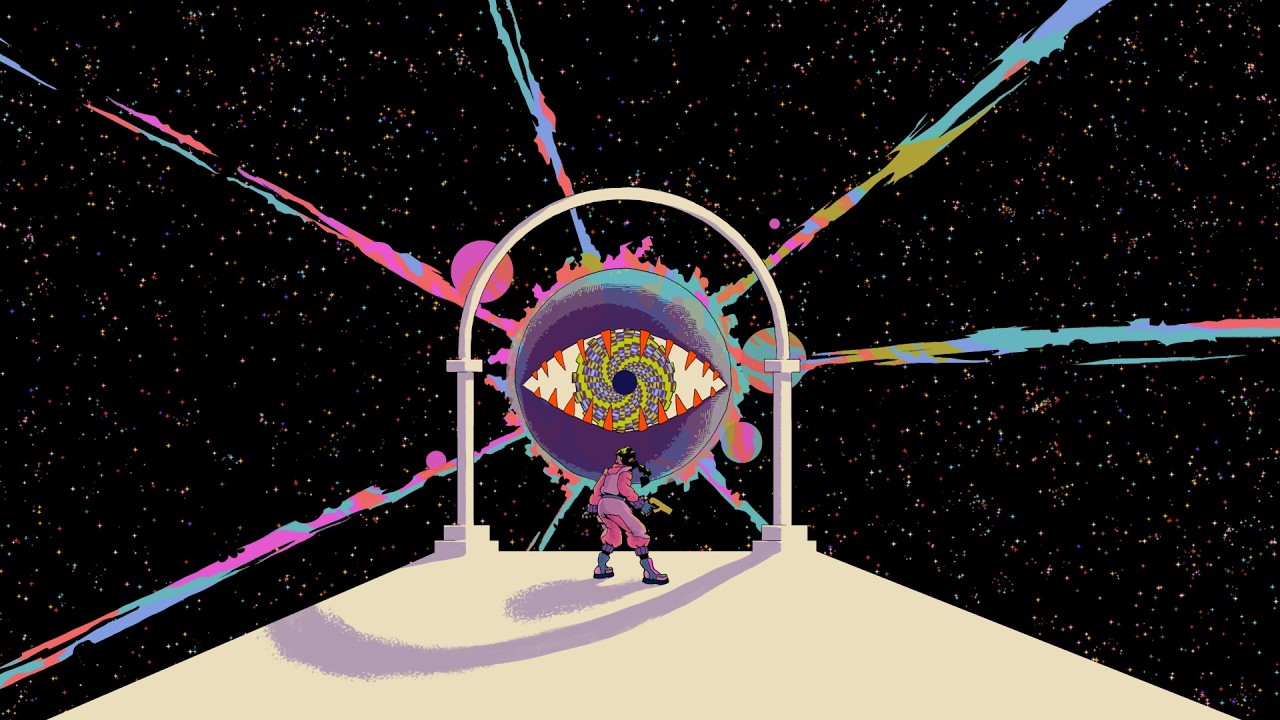
A Bullet Hell Where Thinking Matters
The central time mechanic affects almost every decision.
When an arena fills with shotgun blasts, lasers, explosives and projectiles moving in different directions, the solution is not necessarily to react faster. You can stop, examine the battlefield and work out exactly where the safest route is before committing to your next move.
That does not mean the game is slow.
As we became more familiar with its mechanics, it became increasingly natural to chain movements, attacks and weapon swaps together until combat was moving almost in real time. The important difference is that the option to stop is always there. When a situation suddenly becomes dangerous, you can immediately reassess it instead of relying entirely on reflexes.
This creates a satisfying rhythm between planning and execution that remains the strongest part of the experience.
Combat also encourages experimentation. Enemy attacks can damage other enemies, melee weapons can block or reflect incoming projectiles, and environmental objects can be used to trigger explosions at exactly the right moment.
There were several encounters where positioning an enemy in the path of another enemy's attack was more effective than simply shooting everything ourselves.
Weapons, Characters and Builds Give Runs Their Identity

Enter the Chronosphere offers a broad selection of weapons, ranging from assault rifles and shotguns to rocket launchers, katanas and much stranger alien technology.
Each character can carry two weapons, and many weapons have special interactions when switching between them. Add modifiers for elemental damage, explosions, split shots and other effects, and individual builds can develop in dramatically different directions.
The playable characters reinforce that variety.
Marcia is better suited to avoiding incoming attacks, while Urtar can recover a considerable amount of lost health by continuing to kill enemies within the same turn, encouraging a more aggressive approach. Lillypilly uses her tongue as a grappling hook and naturally lends herself to more melee-focused builds.
Switching characters therefore changes more than appearance. It changes how we think about positioning, risk and the equipment we want to prioritize during a run.
Another important mechanic is Instability. Certain powerful items and weapons increase the instability of a Chronosphere, which can cause enemies to mutate by gaining additional health or dangerous effects such as explosions when they die.
Powerful equipment therefore comes with consequences. A strong upgrade may make your build considerably better while simultaneously making the world around you more dangerous.
Progression Without the Usual Stat Grind

One of the better decisions in Enter the Chronosphere is how it handles long-term progression.
Rather than relying primarily on permanent numerical upgrades, the game gives you objectives such as dealing a certain amount of explosive damage, defeating enemies with melee weapons or reaching a specific depth.
Completing these objectives unlocks additional weapons, items, enemy factions, Chronospheres and larger worlds.
It means unsuccessful runs can still contribute to expanding what is available without reducing progression to filling another experience bar.
The procedurally generated floors also allow some flexibility in how each run is approached. You can explore thoroughly in search of better equipment or head for an exit once your current build is strong enough, avoiding unnecessary fights and additional risk.
Later Chronospheres become larger and begin mixing several factions, environments and loot pools within the same run. That is where the build system becomes particularly interesting, as mechanics that initially exist separately begin interacting in increasingly unpredictable ways.
Replayability benefits considerably from this structure. Different enemy factions offer distinct equipment philosophies, and combining their weapons and modifiers can produce setups that feel genuinely different rather than simply more powerful versions of the same build.
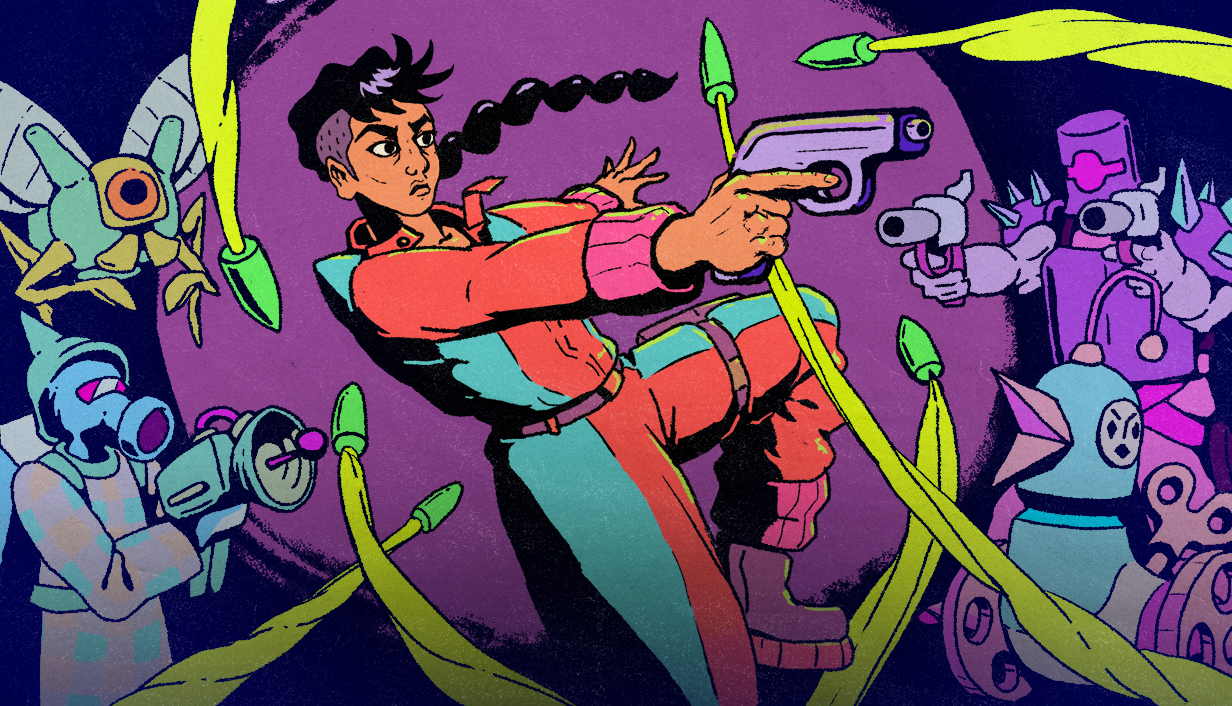
Joystick Ventures, Gamirror Games, Beep Japan Inc.
Everything moves when you do in Enter the Chronosphere, the turn-based roguelike. Each chronosphere is procedurally generated with defenders and biomes from the worlds it has consumed. Break in, find exotic weaponry and gadgets, outsmart hostile aliens, and fight your way to the core.
A Strong Early Access Foundation, but Not Without Problems
For an Early Access release, Enter the Chronosphere already feels surprisingly complete.
During our time with the game, we encountered no crashes or problems serious enough to end a run, although there were occasional brief freezes. Controller support works well with the twin-stick structure, and the overall experience is already relatively polished.
There are still areas that need work.
Balance is the most obvious. Certain multi-beam weapons are considerably more powerful than much of the rest of the arsenal and can eliminate enemies extremely quickly. The final boss also relies more heavily on a large health pool than on particularly interesting mechanics.
There are smaller technical and design issues as well. Ricocheting projectiles can occasionally return at unnatural angles, while some stationary turrets can attack from long distances before their position is immediately obvious.
Accessibility options are also limited, which is particularly noticeable in a game with such an intense color palette and large quantities of projectiles and visual effects on screen.
None of these problems undermine the central experience, but they are reminders that the game is still being developed.
A Roguelike With an Identity of Its Own

Enter the Chronosphere succeeds because its central mechanic is more than a novelty.
Making time move only when the player acts changes how we read every encounter. The same arena can feel like a tactical puzzle one moment and an almost traditional twin-stick shooter the next, depending on how confidently we choose to play.
Combined with varied weapons, meaningful differences between characters, faction-specific loot and a progression system built around unlocking new possibilities rather than simply increasing statistics, it creates a strong foundation for repeated runs.
There is still work to be done with balance, accessibility and some individual encounters, but the core experience is already exceptionally strong.
For an Early Access game, Enter the Chronosphere feels remarkably complete, and its combination of tactical decision-making and immediate action gives it something much more valuable than another collection of roguelike systems: a genuine identity of its own.
*You can read the full original review on Gaming-Sanctum.*